
Project Management Fundamentals for Engineering Leaders
Engineering Project Management Essentials

Securing a role as an Engineering Project Manager requires a resume that clearly demonstrates your ability to navigate the unique complexities inherent in engineering projects. Drawing from the insights shared by industry experts Gary Hinkle and Chris Knutson, along with the training focus of the Engineering Management Institute (EMI) and discussed in the webcast video below from The Engineering Career Coach Podcast, this guide outlines the essential elements to highlight in your resume to stand out to potential employers.
Core Project Management Skills: The Foundation
Your resume must unequivocally showcase your grasp of fundamental project management principles. This includes a strong understanding of the project management triangle: scope, schedule, and cost.
Scope Management: Emphasise your experience in clearly defining project requirements and establishing a well-defined scope. Detail your ability to identify and manage scope creep, a common challenge in engineering projects. Mention your proficiency in using tools like a Work Breakdown Structure (WBS) to break down complex projects into manageable components.
Schedule Management: Highlight your ability to develop and maintain realistic project schedules. Mention experience with scheduling software and your understanding of critical path methodologies. Frame your experience in delivering projects on schedule, a key metric for engineering firms.
Cost Management: Demonstrate your skills in developing and managing project budgets. Include experience with cost estimation, budget control, and financial reporting. Emphasise your track record of delivering projects on budget.
Beyond these core elements, mention your experience in risk management, quality assurance, and stakeholder management as they relate specifically to engineering contexts.
Project Management Fundamentals for Engineering Leaders
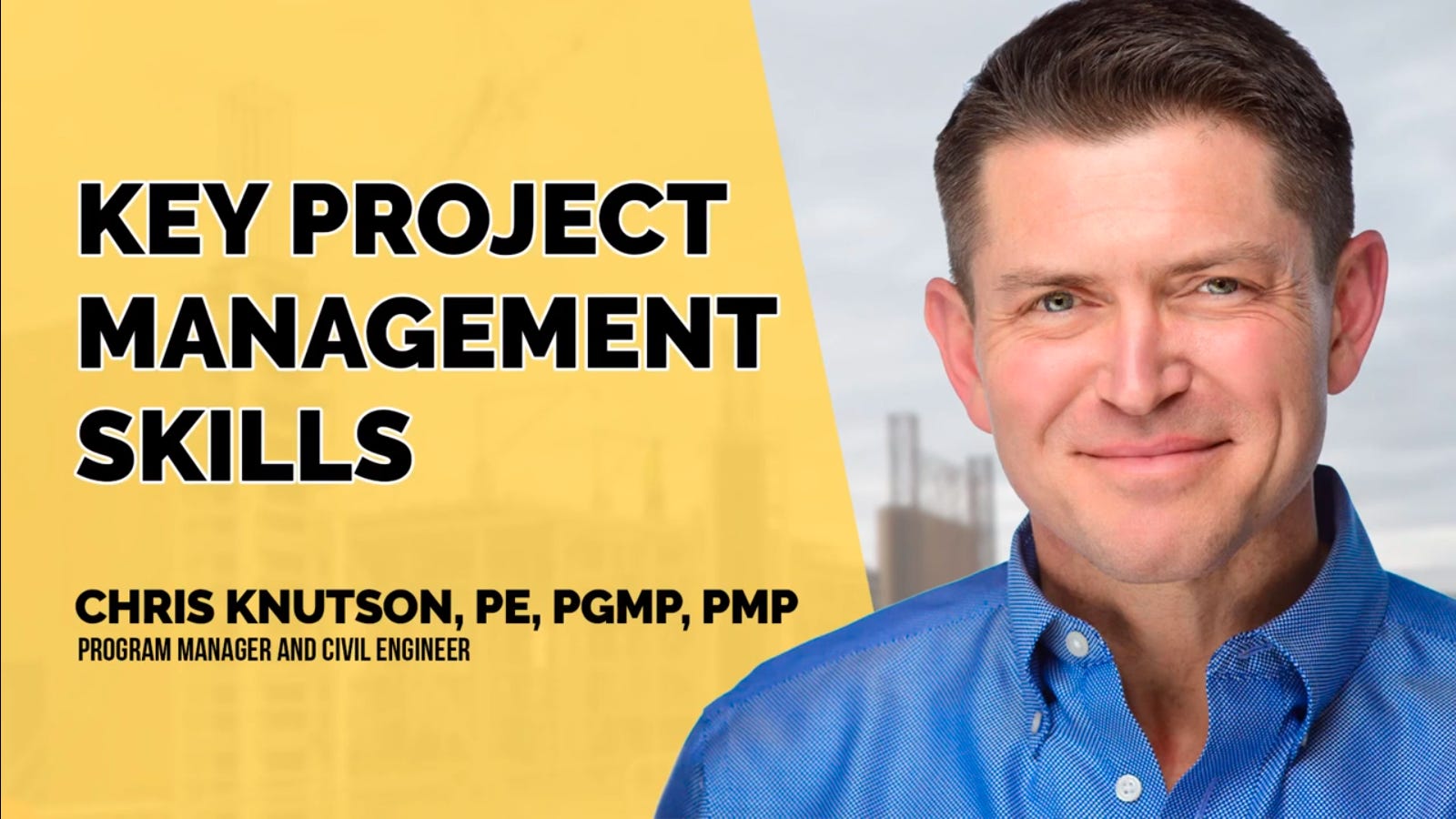
The other inspiring video talk webcast for this Engineering World Compane Post came from Advisicon Consultancy YouTube channel and was a insighful conversation on key Project Managent topics, complementing Chris Knutson talk mentioned earlier.
Engineering Project Management: Proven Strategies for Success | Advisicon
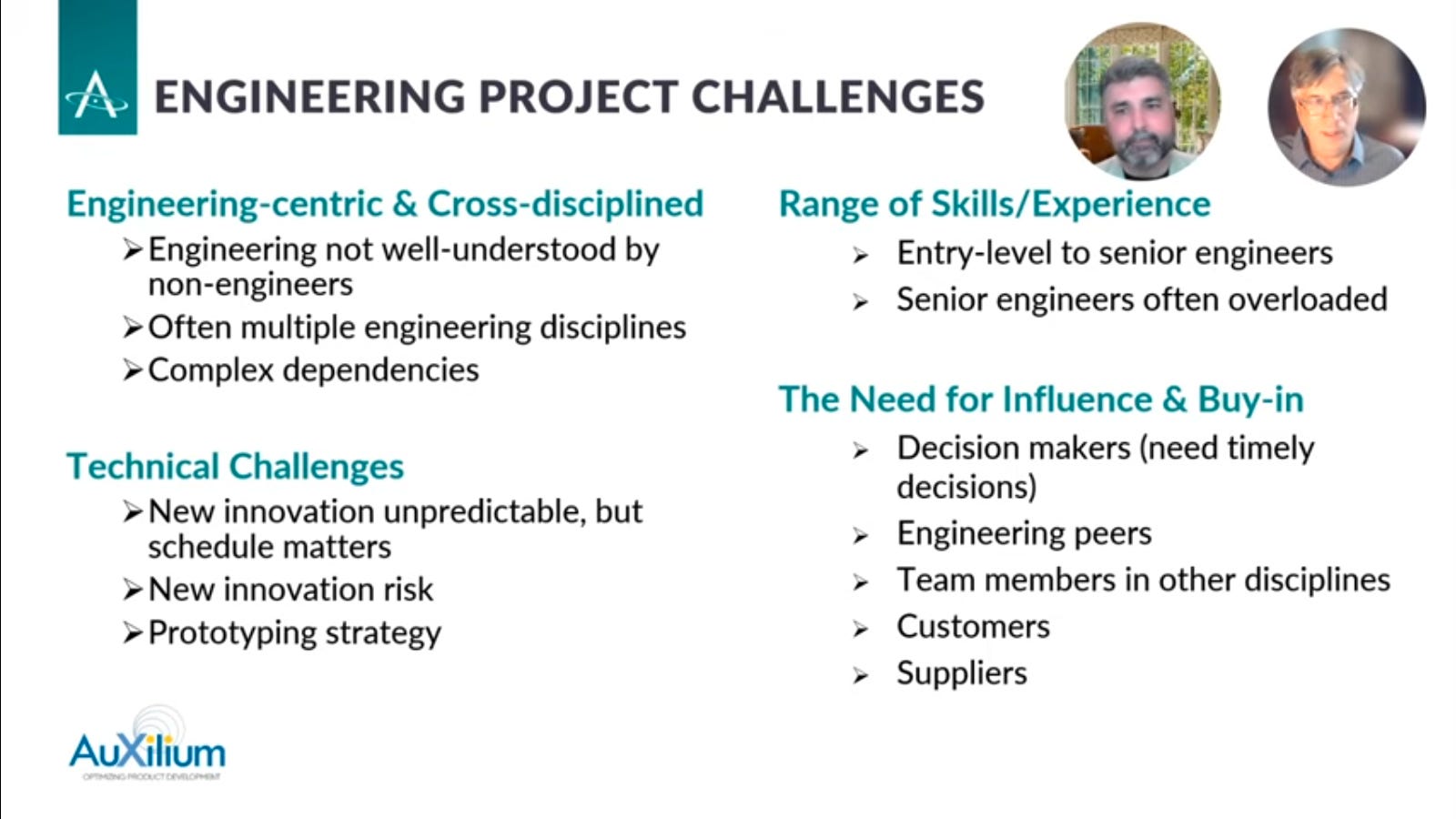
Further diving deeper now into the requirements for a good role resume of Engineering Project Management Leadership. With an Audio summary resource and concluding remarks
Leadership in Engineering Projects: Beyond Technical Expertise
Engineering Project Management demands strong leadership skills that go beyond technical proficiency. Your resume should highlight your ability to lead cross-functional teams comprising diverse engineering disciplines (mechanical, electrical, software, etc.) and other stakeholders like supply chain, manufacturing, and quality.
Communication and Collaboration: Engineering projects are inherently complex and require exceptional communication skills to bridge the gaps between different technical domains and non-technical stakeholders. Emphasise your experience in facilitating effective meetings, presenting technical information to diverse audiences, and fostering a collaborative team environment. Highlight your ability to build buy-in and consensus among stakeholders, a crucial aspect in navigating the complexities of engineering projects.
Problem-Solving and Decision-Making: Engineering projects inevitably encounter technical challenges. Showcase your problem-solving abilities and your capacity to make informed decisions, often involving technical trade-offs.
Delegation and Empowerment: As engineering professionals advance into project management, the ability to delegate effectively becomes paramount. Highlight instances where you successfully empowered team members to take ownership of tasks.
Technical Understanding: The Engineering Context
While your primary role shifts towards management, a foundational understanding of engineering principles remains crucial for effective leadership in this field. Your resume should subtly convey your technical acumen without necessarily delving into excessive technical detail.
Engineering Background: Briefly mention your engineering discipline and relevant technical experience. This provides context for your project management capabilities.
Understanding of the Product Development Lifecycle: Highlight your familiarity with the various stages of engineering product development, from conceptualisation to manufacturing and release.
Appreciation for Complexity: Demonstrate an understanding of the unique complexities associated with engineering projects, such as the integration of hardware and software, manufacturing processes, and the need for manufacturability.
Agile Methodologies: Adapting to Dynamic Environments
Increasingly, agile methodologies are being adopted in engineering, particularly in hardware development. Your resume should reflect any experience or understanding of agile principles and frameworks.
Agile Experience: If you have experience working in agile environments, specifically mention the methodologies used (e.g., Scrum, Kanban) and your role in the agile team. Highlight your understanding of agile ceremonies like daily stand-ups, sprint planning, and retrospectives.
Iterative Development and Prototyping: Emphasise any experience with iterative development cycles and the use of prototyping in engineering projects. Note your understanding of how prototyping differs in hardware versus software development.
Adaptability and Flexibility: Agile principles emphasize the ability to adapt to changing requirements and priorities. Highlight your flexibility and experience in managing projects in dynamic environments.
Highlighting Achievements: Quantifiable Results
Instead of simply listing responsibilities, focus on quantifiable achievements that demonstrate your impact as an Engineering Project Manager. Use action verbs and provide specific examples.
Project Success Metrics: Highlight projects delivered on time, within budget, and according to scope. Quantify these achievements with specific numbers and percentages.
Efficiency Improvements: If you implemented processes or methodologies that led to improved efficiency or reduced costs, provide details and quantify the impact.
Team Leadership Success: Mention instances where you successfully led and motivated engineering teams to achieve project goals.
By focusing on these essential elements, your resume will effectively communicate your qualifications and readiness to excel as an Engineering Project Manager, demonstrating your understanding of both the fundamental principles of project management and the unique challenges and opportunities within the engineering domain. Remember to tailor your resume to each specific job application, highlighting the skills and experiences most relevant to the role.
How does engineering project management complexity differ?
Engineering project management stands apart in its complexity due to several unique characteristics and challenges inherent in the nature of engineering work. Unlike some other project types, engineering projects often involve a high degree of technical intricacy, cross-disciplinary collaboration, and tangible outputs like hardware that introduce unique management considerations.
One of the primary differentiators is the inherent complexity of engineering-oriented work itself. This complexity manifests in several ways:
Technical Depth and Specialisation: Engineering projects typically involve highly specialised knowledge across various disciplines such as mechanical, electrical, software, and firmware. Project managers often need to coordinate teams where individual members possess deep but distinct technical expertise, requiring an understanding of these different domains to facilitate effective communication and integration. This contrasts with projects that might draw on more homogenous skill sets.
Integration of Hardware and Software: Many modern engineering projects involve the intricate integration of hardware and software components. This necessitates managing development cycles that can have different cadences and challenges, as seen in the example of Xbox transitioning from a pure software company to incorporating hardware. Coordinating these intertwined elements adds a significant layer of complexity compared to projects focused solely on one or the other.
Manufacturing Considerations: For projects involving new product development, the manufacturing aspect introduces a whole new level of complexity. This includes ensuring the product is manufacturable, managing manufacturing costs, and potentially even setting up or modifying production facilities. These considerations are often absent in non-engineering projects or even in purely software-based projects.
Cross-Functional Dependencies: Engineering projects are typically cross-disciplined and involve numerous functional teams beyond engineering, such as supply chain, manufacturing, quality assurance, and product management. The dependencies between these diverse groups can be intricate and require careful management to ensure smooth project flow. This necessitates strong cross-functional leadership and coordination skills that might be less critical in projects with fewer interdependent teams.
Furthermore, the human element within engineering project management contributes to its complexity:
Engineering-Centric Mindset: Individuals successful in engineering often possess a detail-oriented mindset. However, as they move into leadership and project management roles, they need to shift their focus towards management and leadership aspects, which can be a challenging transition. The Peter Principle can come into play if technically proficient engineers are promoted without adequate leadership and project management training.
Communication Gaps: The engineering-centric nature can also lead to communication challenges with non-engineers involved in the project who may not fully understand the technical aspects. Similarly, communication between different engineering disciplines can be difficult due to differing terminologies and perspectives.
Finally, the dynamic nature of innovation in engineering adds another layer of complexity:
Unpredictability of Innovation: Engineering projects often involve new innovation, which is inherently unpredictable in terms of technical problem-solving and timelines. This contrasts with projects focused on more established technologies or processes, such as many construction projects that prioritise predictability and minimising reinvention.
Schedule Pressure: Despite the unpredictability of innovation, engineering projects are typically subject to significant schedule pressure, driven by market demands, competitive landscapes, or release cadences. Balancing the need for innovation with the urgency of delivery creates a unique management challenge.
In summary, the complexity of engineering project management arises from the intricate technical work involving diverse disciplines, the integration of hardware and software, manufacturing considerations, complicated cross-functional dependencies, the mindset and communication challenges of engineering-centric teams, and the inherent unpredictability of innovation under schedule pressure. These factors collectively differentiate it from other project management domains that may not face the same combination of technical depth, tangible outputs, and extensive cross-functional integration.
What are typical challenges in cross-functional engineering projects?
Typical challenges in cross-functional engineering projects arise due to the involvement of diverse teams with distinct expertise, priorities, and perspectives. Drawing from the sources, here are some key challenges you might encounter:
Lack of Understanding Between Disciplines: A fundamental challenge is that engineers from different disciplines often don't fully understand the intricacies and challenges faced by other disciplines. For example, mechanical engineers may not grasp the complexities of electronics, and vice versa. This lack of interdisciplinary understanding can hinder communication, create misunderstandings, and lead to suboptimal decisions.
Complicated Dependencies: Cross-functional projects inherently involve complex dependencies between the work of different teams and disciplines. The output of one engineering team might be a critical input for another, or a design decision in one area might have significant implications for other areas. Managing these interconnected tasks and ensuring timely delivery across all dependencies can be a significant challenge.
Difficulties in Cross-Functional Collaboration: While collaboration is essential, achieving effective cross-functional collaboration can be challenging. Teams may operate in silos with different working styles, tools, and priorities. Breaking down these silos and fostering a truly collaborative environment requires proactive effort and strong project management.
Integration Challenges: Integrating the outputs from various engineering disciplines and other functional teams (like supply chain, manufacturing, and quality) into a cohesive final product or system can be complex. Ensuring that all the pieces work together seamlessly requires careful planning, coordination, and testing.
Need for Cross-Functional Project Managers: Effective management of cross-functional projects requires project managers with a specific skillset. There aren't many project managers who are truly adept at navigating these complexities and pulling together diverse teams effectively. This often necessitates strong communication, facilitation, and leadership skills to bridge the gaps between different functional areas.
Balancing Technical Focus with Management: Engineers transitioning into project management roles in cross-functional settings may struggle to find the right balance between their technical inclinations and the necessary management responsibilities. Focusing too heavily on technical details can detract from crucial management tasks like coordination and stakeholder communication.
Achieving Consensus and Buy-in: Due to the diverse perspectives and potential conflicts of interest across different functions, reaching consensus and gaining buy-in on decisions can be difficult. This requires strong influence and negotiation skills from the project manager to ensure that decisions are made in a timely manner and that all stakeholders are aligned.
Communication with Non-Engineering Functions: Engineering-centric teams might face challenges communicating effectively with non-engineering functions who may not have the same technical understanding. Explaining technical concepts and project progress in a way that is clear and relevant to these stakeholders is crucial for maintaining alignment and support.
These challenges highlight the unique complexities of engineering project management, particularly in cross-functional environments where effective communication, collaboration, and leadership across diverse teams are paramount for success. The complexity of engineering-oriented work itself, as discussed previously, underpins many of these difficulties.
How does hardware development impact agile prototyping?
Hardware development significantly impacts agile prototyping in ways that differ considerably from software-only projects.
Firstly, the fundamental nature of hardware means you cannot typically have a fully working physical product in every short iteration in the same way that software development can produce working software increments. As Gary Hinkle notes, unlike pure software where "every iteration there's working software," this is not feasible with hardware. An electronics engineer might traditionally think in terms of months-long phases for tasks like schematic design and circuit board layout, making the concept of short, fully functional hardware iterations challenging to grasp initially.
This leads to a need for innovation in how prototyping is approached in hardware agile. Instead of aiming for fully functional hardware in each sprint, the focus shifts towards demonstrating visible and tangible progress through various means. This might involve:
Prototype brochures: Initially outlining potential product features and capabilities.
Simulated 3D videos: Providing a realistic visualisation of the product and allowing for feedback on design and functionality. This needs to be more than "smoke and mirrors" and should realistically represent the intended product.
Subsystem prototypes: Creating functional prototypes of specific components or systems within the larger product.
Iterative full working prototypes: Progressively building and refining the complete product through several cycles.
The mindset around prototyping also needs to adapt. The idea of "fail early, fail fast" is relevant, but with a focus on identifying and fixing problems early rather than continuous failure. The goal is to learn from smaller, more frequent prototyping efforts rather than waiting for a large, end-of-project prototype to reveal issues.
Furthermore, the concept of a "working prototype" in hardware agile needs to be understood differently. It doesn't always mean a fully shippable product. Instead, it's anything that demonstrates visible, tangible progress on a regular cadence. This allows for stakeholder engagement and feedback throughout the development process.
The integration of hardware and software within a single product also complicates prototyping. The development cycles and the nature of prototypes for each domain can differ, requiring careful coordination.
In summary, hardware development impacts agile prototyping by:
Making fully working physical prototypes in every iteration impractical, unlike software.
Necessitating innovative and staged approaches to prototyping, using methods beyond just physical builds in early stages.
Requiring a shift in mindset towards early and frequent validation using various forms of tangible progress.
Emphasising smaller, more focused prototypes throughout the development cycle.
Adding complexity due to the integration of hardware and software components.
These differences mean that applying agile methodologies to hardware development requires a modified approach, such as the "modified agile for Hardware development framework" (MAD) mentioned, to effectively leverage the benefits of agility while acknowledging the inherent constraints of physical product development.
Why is adapting project plans crucial in dynamic environments?
Adapting project plans is crucial in dynamic environments because these environments are characterised by constant change and unpredictability. If a project plan remains rigid in the face of such dynamism, it quickly becomes outdated and ineffective. Drawing from the sources and our conversation, here's a more detailed explanation:
The world is inherently dynamic: As Gary Hinkle points out, "we live in a very Dynamic World" with "economic conditions changing," "people coming and going," and "priorities changing in businesses". Furthermore, "priorities changing on projects" and "customers changing requirements" are typical examples of this dynamism directly affecting project execution. Without adapting the plan, the project will likely fail to align with the current realities and needs.
Agility as a response to dynamism: The rise of agile methodologies underscores the importance of adaptability. The MAD framework, for instance, is presented as "a very simple way to do that" - to adapt efficiently. It emphasises upfront planning to establish a big picture view but then relies on iterations to "demonstrate progress" and "make adjustments of your overall plan". This iterative approach allows for continuous course correction in response to new information or changes in the environment.
Making informed trade-off decisions: Dynamic environments often necessitate making trade-offs between schedule, scope, cost, and resources. An adaptive plan facilitates this by leveraging the learnings from each cycle to make "intelligent tradeoff decisions based on what you just learned as a team or organisation". This proactive approach to decision-making, as opposed to making "big painful decisions near the end of projects," is a key benefit of plan adaptability.
Avoiding major crises: By constantly adapting, projects can make "minor course Corrections" rather than facing a situation where drastic, disruptive changes are required late in the project lifecycle. This is analogous to making small adjustments to a ship's course to avoid an iceberg, rather than a sudden, potentially catastrophic hard turn.
Addressing the complexity of engineering projects: Engineering projects, particularly cross-functional ones, are inherently complex. This complexity often leads to unforeseen challenges and deviations from the initial plan, such as technical problem-solving not going as expected. An adaptive plan allows for incorporating these realities and adjusting the path forward.
Responding to prototyping insights: In hardware development, as we discussed, agile prototyping involves learning through iterative builds and simulations. The insights gained from these prototypes may necessitate changes to the original plan, such as altering the design or approach based on feasibility or user feedback. A rigid plan would not allow for incorporating these crucial learnings.
Maintaining stakeholder alignment: Dynamic environments can lead to shifts in stakeholder needs and priorities. Regularly revisiting and adapting the project plan ensures that the project remains aligned with these evolving expectations and that stakeholders remain engaged and supportive.
In essence, in a dynamic environment, a project plan should not be seen as a fixed contract but rather as a living document that evolves as the project progresses and the surrounding context changes. The ability to adapt project plans efficiently is a critical factor in ensuring project success and delivering value in the face of uncertainty and change.
Why is stakeholder engagement crucial in engineering projects?
Stakeholder engagement is crucial in engineering projects for a multitude of reasons, directly impacting the likelihood of project success. Drawing on the sources mentioned above in the Post, here's a breakdown of its importance:
Gaining necessary influence and buy-in: Engineering projects are typically characterised by significant complexity and require numerous decisions to be made in a timely manner. To navigate this complexity effectively, project managers need strong leadership to foster consensus and obtain the necessary buy-in from various stakeholders. Without their engagement, decisions can be delayed, leading to project setbacks.
Ensuring alignment and making informed decisions: Getting the right stakeholders involved at the right time with the right information is vital for facilitating progress. This ensures that decisions are made with a full understanding of different perspectives and potential impacts across various parts of the organisation. By engaging stakeholders throughout the project lifecycle, you can leverage their expertise and insights to make more intelligent trade-off decisions.
Facilitating efficient progress and avoiding major issues: Regular engagement allows for making minor adjustments based on feedback and new information, rather than facing major crises later in the project. By keeping stakeholders informed and involved, potential issues can be identified and addressed proactively, preventing them from escalating into significant problems.
Understanding and meeting stakeholder needs: Understanding what is most important to customers and aligning project priorities accordingly is fundamental to success. Stakeholder engagement, particularly with clients, helps to ensure that the project deliverables meet their needs and expectations. Failure to provide adequate support and engage with clients can lead to unhappy clients and financial setbacks.
Obtaining valuable feedback: Leveraging project management tools to engage stakeholders and get their feedback is crucial. Presenting progress in a way that is useful and understandable to different stakeholders allows for valuable input that can be incorporated into the next iteration. This iterative feedback loop helps to refine the project and ensure it stays on track to deliver value.
Maintaining alignment in dynamic environments: As discussed previously, project environments are often dynamic, with changing priorities and requirements. Consistent stakeholder engagement ensures that the project remains aligned with these evolving expectations and that stakeholders remain supportive throughout the changes.
Driving a collaborative team environment: While primarily focused on internal team collaboration, engaging external stakeholders can also foster a sense of shared purpose and contribute to a more collaborative project environment. When stakeholders feel heard and their input is valued, they are more likely to support the project's goals.
In essence, stakeholder engagement in engineering projects is not merely a communication exercise; it is a fundamental aspect of effective project leadership and management. It ensures that projects are aligned with strategic goals, meet stakeholder needs, navigate complexity effectively, and adapt to changing circumstances, ultimately increasing the chances of delivering successful outcomes.
Audio Review Resource: Project Management Fundamentals for Engineering Leaders
Conclusion
In conclusion, our discussion, drawing from the insights of both Advisicon and Engineering Management Institute, underscores that stakeholder engagement is an absolutely vital element for the successful execution and delivery of engineering projects.
Firstly, effective stakeholder engagement is fundamental for securing the necessary influence and buy-in that are crucial for navigating the inherent complexity of engineering projects and ensuring timely decision-making Without active engagement, achieving consensus and moving projects forward can be significantly hindered.
Secondly, engaging the right stakeholders at the right time with the appropriate information is key to ensuring alignment of the project with business goals and customer needs. This informed participation facilitates more intelligent trade-off decisions throughout the project lifecycle.
Furthermore, consistent engagement enables the proactive identification and resolution of potential issues through valuable feedback, allowing for minor course corrections and preventing the emergence of major problems later on. This iterative approach to feedback and adaptation is essential in dynamic environments.
A crucial aspect of stakeholder engagement is understanding and ultimately meeting their needs and expectations . Particularly when dealing with clients, neglecting their input can lead to dissatisfaction and financial repercussions.
Leveraging project management tools to actively solicit and incorporate stakeholder feedback is also paramount. Presenting progress in a clear and accessible manner encourages meaningful interaction and ensures that diverse perspectives are considered.
In the dynamic environments in which many engineering projects operate, maintaining consistent stakeholder communication is essential for adapting to changing priorities and ensuring continued support. Keeping stakeholders informed and involved helps the project remain relevant and aligned with evolving circumstances.
Finally, while internal team collaboration is vital, engaging external stakeholders can foster a sense of shared purpose and contribute to a more collaborative overall project environment. When stakeholders feel their contributions are valued, their commitment to the project's success is strengthened.
Ultimately, robust stakeholder engagement is not merely a peripheral task but rather a central pillar of effective engineering project management. It underpins successful navigation of complexity, alignment with objectives, proactive risk management, and the delivery of outcomes that meet the needs and expectations of all invested parties.